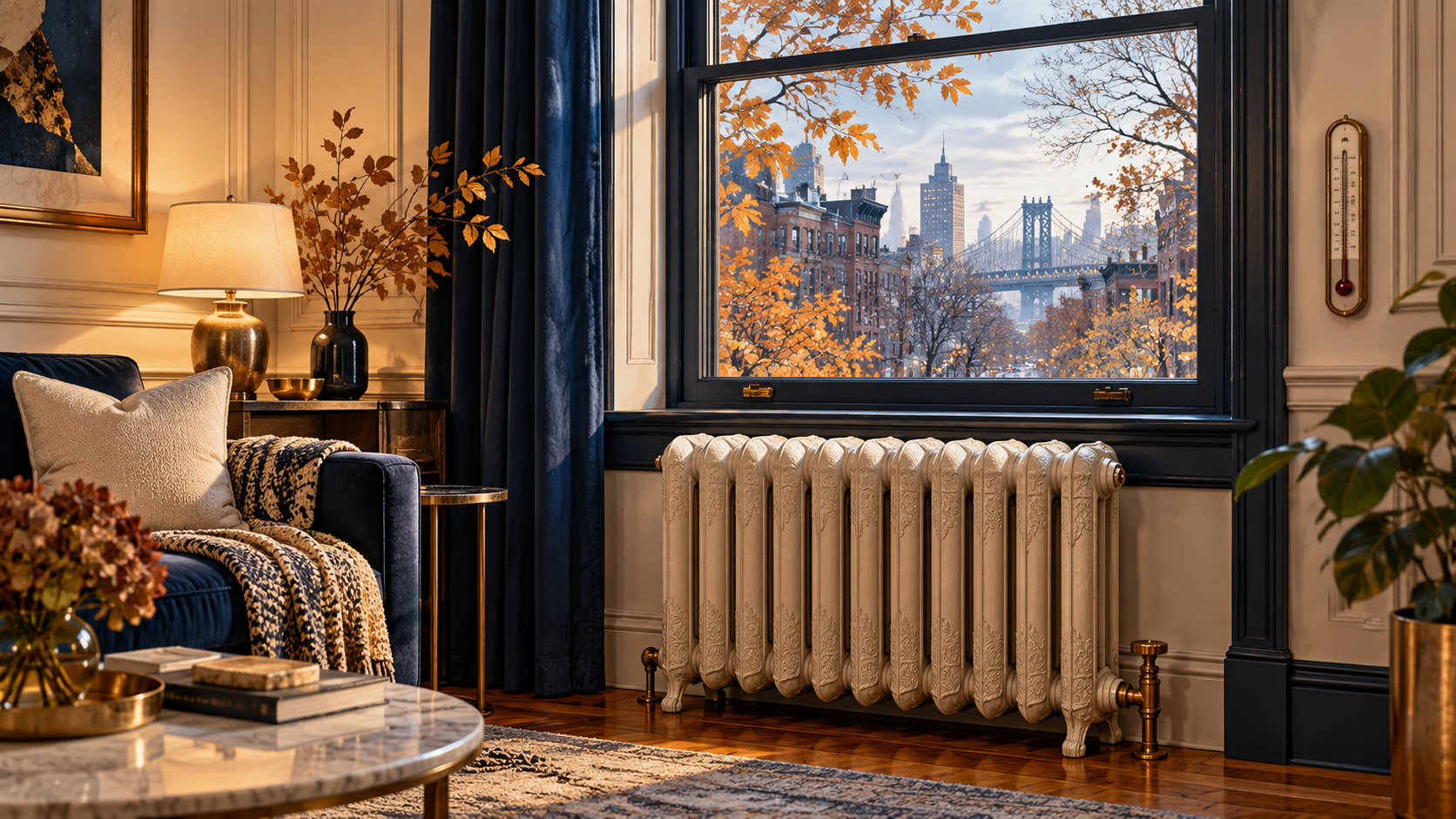
NYC heat season runs from October 1 through May 31. For an Astoria or Queens apartment, the practical question is whether the living space meets the required indoor temperature at the relevant time. A warm radiator alone does not answer that question. Record the room temperature, contact building management, and use the City’s reporting process when a heat or hot-water problem remains unresolved.
This guide explains the rules for the 2026–27 heating season and offers a winter preparation checklist for renters, buyers and small-property owners. It also shows how to compare apartments without treating a quick viewing as proof that a heating system will perform well all winter.
NYC heat season: the temperatures to know
According to NYC Housing Preservation and Development’s heat and hot-water guidance, the daytime minimum is 68°F between 6 a.m. and 10 p.m. when the outdoor temperature falls below 55°F. Overnight, between 10 p.m. and 6 a.m., the indoor minimum is 62°F regardless of the outdoor temperature. Hot water is required throughout the year; HPD’s general guidance specifies a minimum of 120°F.
The day and night tests differ. For example, a relatively mild afternoon does not remove the overnight requirement. These are minimum standards, rather than a promise that every room will feel equally comfortable to every resident. Check the linked official guidance for updates and building-specific questions.
Start with a clear record of the problem
If your apartment feels cold, write down what you observe before sending a vague message about the boiler. Include the date, time, room and thermometer reading. Keep the device away from a radiator, direct sunlight or an open window so that the reading describes the room rather than a nearby heat source.
For your own comparison, use the same location and device when possible. A short record can help distinguish a recurring early-morning issue from a single interruption. It can also give the superintendent a better starting point for investigation. Your notes support communication; they do not replace an official inspection.
Describe hot-water problems separately. Is the issue limited to one fixture? Does the water become cold after a few minutes? Is there no hot water anywhere in the apartment? Explain the pattern without attempting to adjust the building’s equipment or exposing yourself to scalding water.
A useful message to building management
A concise report might say: “The bedroom thermometer read 59°F at 7:15 a.m. today. The windows were closed. I first noticed the issue last night. Please confirm when someone can inspect the heating system and how I should arrange access.” This is an illustrative message, not a report about an actual Aida-managed property.
Save the message, response and any appointment details. If you call, follow up in writing with a short summary. Confirm access instructions through the building’s established contact channel. Do not give access codes or keys to an unidentified person who simply claims to be a contractor.
When to contact 311 about missing heat
HPD advises tenants to contact the landlord or managing agent first. If the owner does not respond or does not resolve the condition, tenants can make a heat or hot-water complaint through 311. Keep the service request number and follow the instructions provided by the City. An inspector’s assessment and enforcement process are separate from your private messages to the owner.
Continue recording changes while a repair is being arranged. If the heat returns and fails again, note both events. Accurate updates help everyone understand whether the interruption has ended or is recurring. If an inspection requires access, respond to the agency’s instructions so the condition can be assessed.
Do not assume that an online complaint automatically changes your lease obligations. Questions about withholding rent, reimbursement, lease termination or a dispute require advice specific to your situation. A real estate viewing checklist is not a substitute for that advice.
Safe winter comfort while repairs are arranged
Never heat an apartment with an oven or gas range. FDNY’s winter fire-safety guidance says to keep portable electric heaters at least three feet from combustible materials, avoid extension cords, and switch them off and unplug them when leaving the room or going to sleep. Follow the equipment instructions and use an appropriate, undamaged device.
Comfort measures should not create a second problem. Keep exits, hallways and access to equipment clear. Do not cover a heater with clothing or use it to dry wet belongings. Ask management about any unusual noise, leak or equipment condition rather than opening panels or experimenting with valves.
If you suspect a gas leak or another immediate hazard, leave the affected area and contact the appropriate emergency service from a safe location. Routine maintenance questions belong with management; an urgent safety concern should not wait for a broker to return a call.
Questions to ask at an Astoria apartment viewing
NYC heat season is also a good time to ask better rental questions. During a viewing in Astoria, Long Island City, Sunnyside or another Queens neighborhood, identify the heating equipment you can see and ask how the system is operated. Avoid drawing conclusions about an entire building from one radiator or thermostat.
- Which utilities are included in the quoted rent, and which accounts would the tenant open?
- Who controls the heat, and what should a resident do if a room feels too cold?
- Where is the thermostat, if the apartment has one?
- How are urgent maintenance requests handled outside normal office hours?
- Are there instructions for operating any apartment equipment?
- What is the established process for contractor access?
Ask for lease terms and utility responsibilities in writing. A phrase such as “heat included” does not tell you about cooking gas, electricity, cooling or internet. Make a simple comparison sheet for each apartment so that different arrangements remain easy to understand after several viewings.
Our Astoria and Queens apartment viewing checklist covers the wider inspection conversation, including layout, light, condition and documents. Use it with these winter questions rather than trying to remember everything at the doorway.
Compare the full winter housing budget
Two apartments with the same advertised rent can leave different monthly costs. Build your comparison around the services you would actually pay for. Ask whether available utility information describes the current unit and current equipment, rather than relying on a previous resident’s informal estimate.
Consider an illustrative choice between two rentals. Apartment A has a slightly lower rent but separately billed heating. Apartment B has a higher rent with heating included under the lease. Neither is automatically the better choice. You still need to compare the equipment, utility responsibilities, apartment condition, commute and your own budget.
Use a cautious allowance where a cost is not yet known. Then replace that allowance with verified information before making a commitment. Do not treat one mild month’s bill as a reliable estimate of the most expensive winter month. Keep moving expenses and any overlapping rent separate from recurring utility costs.
NYC heat season preparation for Queens owners
For an owner, winter planning begins before a tenant reports a cold room. Arrange qualified servicing, keep contractor contact information accessible and establish a clear response process. Make sure the person receiving maintenance messages knows how to escalate a heating interruption.
Organize records by building and date. A practical folder can hold service invoices, equipment instructions, contractor details and follow-up work. These records help you answer operational questions and plan replacement spending. An invoice for a recent repair does not, by itself, guarantee the condition of the entire system.
For a small Astoria property, map the responsibilities among owner, manager and contractor. Decide who can authorize urgent attendance and who communicates with residents. A clear chain of contact can reduce confusion when an issue happens at night or while the owner is away.
Buying a home during heating season
Buyers should ask their inspector to evaluate the accessible heating equipment within the scope of the inspection. Ask what could not be tested and whether a specialist should investigate further. Keep an allowance for maintenance and replacement in your ownership budget rather than spending every available dollar on the down payment.
For a co-op or condo, ask your attorney about building records relevant to major systems and planned work. A renovated apartment can still be part of a building facing equipment replacement. Compare unit-level comfort questions with the financial responsibilities that come with the building.
A practical winter action plan
- Today: save management and emergency contacts, confirm utility responsibilities and locate equipment instructions.
- Before a cold spell: make sure repair requests have a clear route and arrange any outstanding professional checks.
- If a problem occurs: record the condition, notify the responsible party and preserve the response.
- If unresolved: follow the City’s reporting process and keep the request reference.
- Before renewing or moving: review the winter experience alongside price, condition and other housing needs.
These steps are deliberately simple. The value comes from having accurate information when a decision is needed. A folder of clear records is more useful than a long collection of unverified assumptions about how a particular building operates.
Frequently asked questions about NYC heat season
Does the heating season end when the weather becomes warmer?
The official season runs through May 31. The applicable temperature test still matters within that period. Check the daytime and overnight conditions rather than relying only on the date or the feel of the radiator.
Should a renter adjust the boiler or radiator equipment?
Ask management for operating instructions and report problems. Do not attempt building-system repairs or alterations. The right response depends on the equipment and the condition, which a qualified person should assess.
Can Aida Home Realty inspect a heating system?
A real estate conversation can help you organize questions and compare housing options. Technical system evaluation belongs with an appropriate inspector or qualified contractor. Ask for a clear scope before hiring a professional.
How can I compare Queens rentals more effectively this winter?
Start with your move date, budget and preferred locations. Then compare lease terms, utility responsibilities and maintenance procedures alongside the apartment itself. Explore Aida’s Astoria and Queens rental service or contact the team to discuss your search.
Official guidance checked October 28, 2026. This article provides general housing information; consult the linked City guidance and appropriate professionals for a specific building or dispute.